

Sustainability without reliability doesn’t work in practice.
Most conversations about sustainable swai start at the farm. But for buyers like you, that’s only part of the picture.
Real sustainability means the entire supply chain, from farm to freezer to kitchen or retail, can reliably deliver quality, responsible sourcing, and consistent supply. In the US seafood market, that reliability matters just as much as how the fish are raised.
At Coast Beacon, we help move responsibly sourced swai into the US market by working with manufacturers that prioritize stable production and operational alignment.

It Starts at the Source
Supply stability doesn’t begin at the dock. It begins long before that.
Feed management, water quality, harvest planning, and production coordination all shape how consistently swai reaches buyers downstream. When these systems are working well at origin, buyers get more predictable supply and a more stable quality.
Dependable supply chains aren’t built through one-off fixes. They’re built through consistency at every stage.
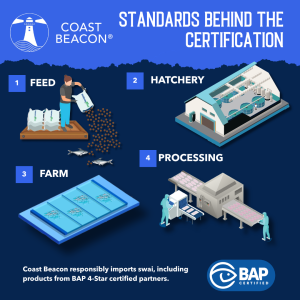
Standards Build Trust
As supply chains grow more complex, certifications matter more than ever.
Standards like Best Aquaculture Practices (BAP) assess whether responsible practices are being maintained across the full production system: hatcheries, farms, feed mills, and processing facilities included.
For retailers, and foodservice buyers, these frameworks provide greater confidence in where swai comes from and how it’s handled. Because strong sourcing isn’t just about the final product. It’s about how well the whole system holds up.
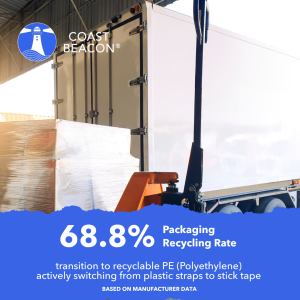
Packaging Is Part of the Picture Too
Good packaging today does more than protect fish in transit. It also affects logistics efficiency and environmental footprint across the supply chain.
Packaging materials used in swai supply currently achieve a 68.81% recycling rate (according to manufacturer’s data, with ongoing work to reduce unnecessary plastic and shift toward lighter, recyclable materials like PE where possible.
For frozen swai, that means meeting two goals at once: protecting a delicate product through transportation, and doing so in a way that’s operationally smarter and more sustainable.
Long-Term Thinking Is What Makes It Sustainable
Sustainable swai isn’t just about responsible farming. It’s about whether the sourcing system can keep performing as demand shifts and market conditions change.
When operations across farming, processing, and supply coordination work together seamlessly, buyers gain greater consistency and reliability. The result is stronger partnerships and more dependable sourcing over time.
Because sustainability isn’t a single effort. It’s what happens when the whole system continues to hold together.
Connect with our team: https://www.coastbeacon.com/contact/