

Over the years, we have noticed something in our conversations with seafood buyers. A sourcing conversation often starts with a very simple question:
“Can you give me a better price?”
Then, once we start talking, the questions become more interesting.
“What other formats are available?”
“Can you support the volume?”
And eventually:
That is what makes Q4 an interesting time for us.
As buyers start planning for 2027, we are seeing the conversation move beyond today’s quotation. It is becoming more about finding the right combination of cost, product fit, availability and supply reliability.
Here are some of the questions we find ourselves discussing most often recently.
~ ~ ~
“I Got a Lower Price. Can You Match the Offer?”
This is probably one of the most common conversations in seafood procurement. A buyer receives a lower quotation from another supplier. Naturally, it gets attention.
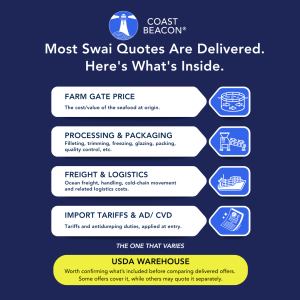
For frozen Swai, most market quotations are delivered, with ocean freight, tariffs and AD/CVD already factored into the price. The main detail that can differ is the USDA warehouse piece. Some offers include it; some do not.
It is a small detail, but worth checking before comparing two numbers. The bigger question is what happens after the quotation is accepted.
Can the supplier still deliver on that commitment when the market moves?
Frozen whitefish has been through a lot in recent years. Pandemic disruption. Tariff changes. Antidumping reviews. Each one has tested suppliers and their ability to stand behind the commitments they make.
A competitive price matters. But so does what happens when the market changes.
At Coast Beacon, our track record is built on standing behind our commitments through changing market conditions, from supply chain disruptions to shifts in tariffs and trade measures. For buyers, that consistency is part of the value behind the price.
Because the question is not only:
It is:
And perhaps the more important question:
“Whose price will still be there in month eight?”
~ ~ ~
“We’re Looking at Whitefish Options. Which One Is Better?”
We often hear customers ask: “Which one should we go with?”
But when we dig a little deeper, the answer is rarely just about the species.
Swai is already an established product in the US market. FDA recognizes Swai, Sutchi, Striped Pangasius and Tra as acceptable market names for Pangasianodon hypophthalmus.[4]
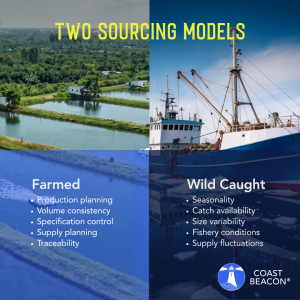
But we do not see the opportunity as simply replacing whitefish. One customer may need a specific specification or portion cut. Another may be working towards a particular price point, while others want to completely remove seasonality or catch volatility from the equation. The right choice depends on what the product needs to do for the business.
What works for your customer? What works for your menu or retail format? What works at your target price point?
That is why we look beyond the species and ask: What format makes the most sense for your business?
~ ~ ~
“What Happens When We Need More?”
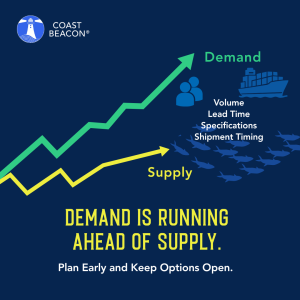
This is another question that often comes up after we have found a product that works. A buyer may be happy with today’s order. But if the program grows, can the supply grow with it?
For a distributor, restaurant group or retail customer, consistency matters. The right product needs to be available not only when the first order is placed, but when the next order comes around too.
That is why we like to talk about expected volume, specifications, lead times, size flexibility and supplier capacity early.
Not because we can predict exactly what the market will do.
But because having a clearer view of supply gives buyers more room to plan.
~ ~ ~
“Does the Origin Make a Difference?”
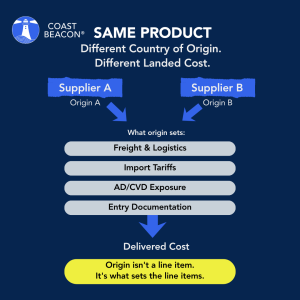
Sometimes two products look almost identical on paper. Then we look at where they come from, and the sourcing picture becomes very different.
Country of origin is not a cost of its own. It is what determines several of them: the tariff lines that apply, whether an antidumping or countervailing duty order is in play, the documentation required at entry, and the freight lane itself.[1][2]
Those orders are live, not historical. Certain frozen fish fillets from Vietnam remain subject to an existing antidumping duty order, and exposure to it is not identical across every supplier.[3] Imported seafood must also meet applicable US FDA requirements.[6]
So origin is not simply another detail on a specification sheet. It is part of understanding the full sourcing picture.
When we put those pieces together, the decision becomes much clearer.
~ ~ ~
“But Will It Actually Work for My Customer?”
This is probably the question we like the most. Because sometimes a buyer comes to us asking for frozen Swai fillets.
But that is only the starting point. We want to know what happens after the product leaves the supplier. What size does the customer need? What specification? What portion? What application? What price point?
Two products can both be called frozen Swai fillets and still be very different commercial propositions.
So rather than starting with: “What product do you have?”
We prefer to ask: “What does your customer need?”
Once we understand that, finding the right product and format becomes a much more helpful conversation.
~ ~ ~
And That Is Where 2027 Planning Starts
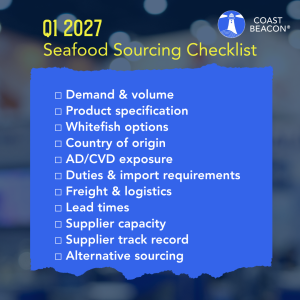
By the time Q4 arrives, the next sourcing cycle is already taking shape. For us, good planning is not about trying to predict every movement in the market.
It is about making sure buyers understand their options before they need to make the next decision.
That could mean looking at:
- Expected demand and volume
- Product specifications
- Tilapia, Swai and other whitefish options
- Country of origin
- AD/CVD exposure
- Freight and logistics
- Lead times
- Supplier capacity
- Supplier track record through past market disruptions
- Alternative sourcing options
NOAA seafood trade data can also provide visibility into US import activity by product, country and time period, giving buyers another useful reference when looking at broader sourcing patterns.[7]
Because when the next purchasing cycle begins, having more than one option can make a big difference.
~ ~ ~
What We Are Taking Into 2027
After all these conversations, one thing keeps coming back to us:
The best sourcing decision is rarely based on one number. It is about finding the right balance between cost, product fit, availability, origin and supply reliability, and whether the supplier behind the number will still be standing behind it a year from now.
So if you are looking at Tilapia, Swai or other frozen whitefish for 2027, perhaps the better question is not: “What is the cheapest option?”
But: “What option makes the most sense for our business and our customers?”
That is the conversation we have at Coast Beacon every day.
And that is where we believe the real sourcing opportunity begins.
Planning your Q1 2027 seafood sourcing?
Talk to us about specifications, volume, origin and supply for the next cycle.
Sources
- U.S. International Trade Commission, Harmonized Tariff Schedule
- U.S. Department of Commerce, International Trade Administration, AD/CVD Search
- USITC, Frozen Fish Fillets from Vietnam, June 11, 2026
- FDA, The Seafood List: Pangasianodon hypophthalmus
- SeafoodSource, US Demand for Pangasius
- FDA, Importing Food Products into the United States
- NOAA Fisheries, Foreign Fishery Trade Data